1. Introduction
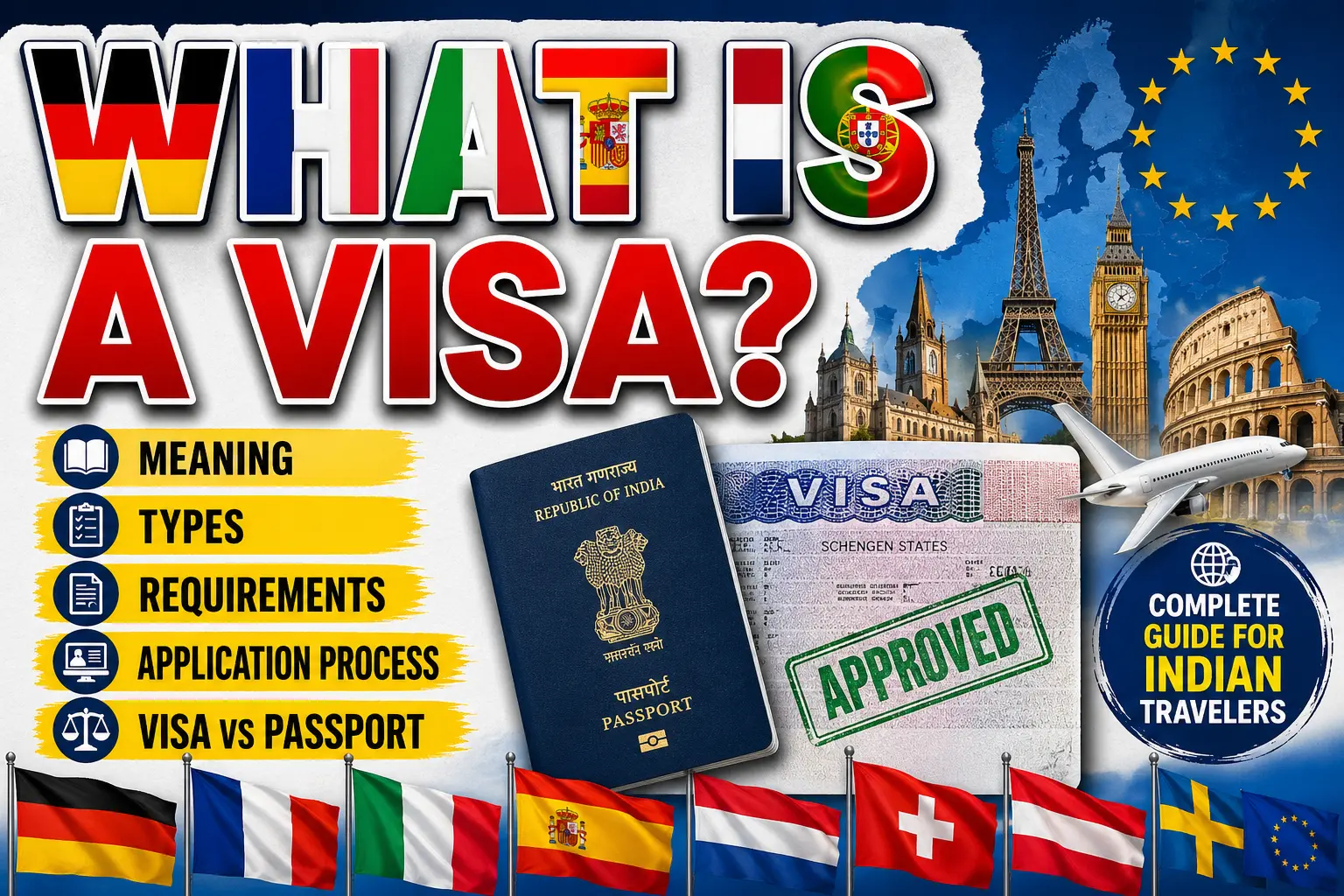
International travel today is more accessible than ever for Indian citizens. Whether it is for tourism, higher education, job opportunities, or business expansion, travelling abroad has become a common aspiration. However, before you board a flight to another country, there are two critical things you must understand clearly: passport and visa.
A passport proves who you are, but a visa decides whether you are allowed to enter another country.
In simple terms, a visa is an official permission granted by a foreign country that allows you to enter, stay, or travel through its territory for a specific purpose and time period. This permission is not automatic. Every country has its own immigration rules, and they carefully check who is entering and why.
Understanding International Travel Basics
When you travel internationally from India, the process generally involves:
- Holding a valid Indian passport
- Checking visa requirements for your destination country
- Applying for a visa if required
- Carrying supporting documents like tickets, hotel bookings, and financial proof
Governments use visas as a control mechanism to manage entry into their country. It helps them verify travelers, ensure security, and regulate how long visitors can stay.
Even before you plan your trip, the Ministry of External Affairs in India clearly advises travellers to ensure they have the correct visa for the countries they are visiting or transiting through.
Why Visas Are Important for Indian Travelers
For Indian citizens, visas play a very important role in international travel. Unlike some countries with stronger passports, Indians often need a visa in advance for many destinations.
Here are a few key reasons why visas are crucial:
- Legal Entry Requirement: Without a valid visa, you may not be allowed to board your flight or enter the destination country.
- Purpose-Based Permission: Whether you are going for tourism, study, or work, the visa defines what you are allowed to do.
- Security and Background Verification: Countries assess your financial status, travel history, and intent before granting a visa.
- Travel Freedom Limitations: As of 2026, Indian passport holders have visa-free or visa-on-arrival access to a limited number of countries, while many destinations still require prior visa approval.
This is why understanding visas is not just useful, it is essential for smooth and stress-free travel.
What This Blog Will Cover
In this complete guide, you will find everything you need to know about visas in a simple and practical way, especially for Indian applicants:
- What is a visa and how it works
- Different types of visas based on purpose and duration
- Complete visa requirements for Indians
- Step-by-step visa application process
- Visa fees and processing timelines
- Clear difference between visa and passport
- Real-life examples to simplify your understanding
- Common visa rejection reasons and expert tips
- Special section on Georgia visa for Indians
This guide is designed to give you real clarity, not confusion, so that you can confidently plan your international journey without mistakes.
Let’s now start with the most important question: What exactly is a visa?
2. What is a Visa? (Meaning Explained Simply)
Simple Definition of a Visa
A visa is an official permission given by a foreign country that allows you to enter, stay, or travel through that country for a specific purpose and period of time.
In very simple words: Visa = Permission to enter another country
It is usually issued by the embassy or consulate of the country you want to visit and is often stamped or attached to your passport.
From a legal perspective, a visa is considered a conditional authorization, meaning the country has reviewed your application and allowed you to travel to their border and request entry.
Understanding the Concept in Practical Terms
Think of a visa like this:
- Your passport proves who you are
- Your visa tells the other country why you are coming, how long you can stay, and what you are allowed to do
For example:
- A tourist visa allows sightseeing
- A student visa allows studying
- A work visa allows employment
Also, an important point many Indians misunderstand: A visa does not guarantee entry. Even with a visa, the immigration officer at the airport has the final authority to allow or deny entry.
Real-Life Examples (Indian Traveler)
Example 1: Traveling to the USA
Suppose an Indian citizen wants to visit the United States for tourism:
- They apply for a US tourist visa (B1/B2)
- Submit documents like passport, bank statements, and travel plan
- Attend a visa interview
- If approved, the visa is stamped on the passport
This visa allows them to travel to the US airport and request entry for tourism, but the final entry decision is still taken at immigration.
Example 2: Traveling to the UK
If you are going to the United Kingdom:
- You must apply for a UK Standard Visitor Visa before travel
- The visa will clearly mention the duration (usually 6 months) and purpose (tourism, family visit, etc.)
Without this visa, you will not even be allowed to board your flight from India.
Example 3: Traveling to Georgia
For a destination like Georgia:
- Indian citizens may apply for an e-visa or get visa-free access under certain conditions
- Once approved, you receive a digital visa
- You show this at immigration when you arrive
This shows how visa systems can vary from country to country.
Key Takeaway
To summarize in the simplest way:
- A visa is your entry permission issued by a foreign country
- It defines your purpose, duration, and conditions of stay
- It is a mandatory requirement for most international travel for Indians
Understanding this concept clearly is the first step to planning your international journey without confusion or mistakes.
3. Why Do You Need a Visa?
Understanding why visas are required is very important, especially for Indian travelers planning to go abroad. Many people think a visa is just a formality, but in reality, it plays a critical role in how countries manage international travel.
1. Legal Requirement
A visa is a legal permission issued by a foreign government. Without it, entering that country is considered illegal.
- Most countries require Indian citizens to obtain a visa before travel
- Airlines may deny boarding if you do not have a valid visa
- Immigration officers can refuse entry or deport you if you arrive without proper authorization
A visa is officially defined as an authorization that allows you to enter, stay, or transit through a country under specific conditions.
If passport = identity, then visa = legal entry approval
2. Immigration Control
Every country uses visas to control who enters their borders. Governments need to manage the number of visitors, type of visitors (tourists, workers, students), and duration of stay.
Visa systems help them track travelers before arrival, decide who is eligible to enter, and prevent illegal immigration. In many cases, visa applications are reviewed in advance so authorities can assess your financial status, travel history, and purpose of visit before allowing entry.
3. Security and Verification
One of the most important reasons for visas is national security. Before granting a visa, embassies check your identity and background, criminal records (if any), financial stability, and travel history.
This helps countries prevent illegal activities, ensure visitors do not pose a security risk, and maintain public safety. Visa screening also ensures that travelers meet health or legal requirements before entering the country.
Many visa rejections happen not because of bad intent, but due to incomplete documents, unclear travel purpose, or weak financial proof.
4. Purpose-Based Travel (Tourism, Study, Work)
A visa is not just permission to enter. It clearly defines what you are allowed to do in that country. Different visas are issued based on purpose:
- Tourist Visa: For travel, sightseeing, visiting family
- Student Visa: For studying in universities
- Work Visa: For employment
- Business Visa: For meetings, conferences, trade
For example, a tourist visa allows only leisure activities and does not permit employment. You must strictly follow the purpose of your visa. If you misuse it (for example, working on a tourist visa), it can lead to visa cancellation, deportation, or future travel bans.
Key Takeaway
You need a visa because it acts as a legal entry requirement, helps countries control immigration, ensures security and background verification, and defines your purpose and duration of stay.
A visa is not just a document. It is a permission with conditions.
4. Types of Visas (Detailed Explanation)
Understanding the different types of visas is very important because choosing the wrong visa category is one of the most common reasons for rejection. Visas are generally classified based on purpose of travel, duration of stay, number of entries, and special categories.
A. Types of Visas Based on Purpose
This is the most important classification, as your visa type depends on why you are traveling. Immigration authorities strictly check your purpose before approving a visa.
1. Tourist Visa
A tourist visa is issued for holidays and sightseeing, visiting family or friends, and short recreational trips.
Key points:
- Usually valid for a few weeks to 6 months
- Does not allow work or long-term study
- May be single or multiple entry
Examples for Indians: USA B1/B2 Visa, UK Standard Visitor Visa, Thailand Tourist Visa. Tourist visas are meant purely for leisure and casual visits.
2. Student Visa
A student visa allows you to study in a foreign university or college and attend full-time academic courses.
Requirements usually include:
- Admission letter from a recognized institution
- Proof of funds
- Academic documents
Many countries allow part-time work with restrictions under student visas.
Examples: USA F1 Visa, UK Student Visa, Canada Study Permit.
3. Work Visa
A work visa is issued when you have a job offer from a foreign employer or plan to work legally in another country.
Key requirements:
- Employment offer
- Skill qualifications
- Employer sponsorship (in most cases)
Work visas are more complex and strictly regulated due to labor laws. Examples: Germany Work Visa, UK Skilled Worker Visa, UAE Employment Visa.
4. Business Visa
A business visa is for attending meetings or conferences, exploring business opportunities, and short-term corporate visits. You cannot take up employment on a business visa.
Examples: Schengen Business Visa, USA B1 Visa. Business visas are typically issued for short stays and official visits.
5. Transit Visa
A transit visa is required when you pass through one country to reach another destination. Key features:
- Very short duration (hours to a few days)
- Sometimes restricted to airport only
Transit visas are specifically designed for short stopovers during travel.
B. Types of Visas Based on Duration
Visas are also categorized based on how long you can stay.
1. Short-Term Visas
- Usually valid up to 90 days
- Ideal for tourism, business trips, or short visits
Example: Schengen Visa (up to 90 days stay).
2. Long-Term Visas
- Valid for more than 90 days
- Used for study, work, or long-term stay
Examples: Student Visa, Work Visa, National Visa (Type D in Europe). Long-term visas often lead to residence permits.
C. Types of Visas Based on Entry Type
This classification defines how many times you can enter a country.
1. Single Entry Visa
- Allows entry only once
- Becomes invalid once you exit the country
Example: Many tourist visas issued for short trips.
2. Multiple Entry Visa
- Allows multiple visits within validity
- Ideal for frequent travelers
Example: USA Visa (often multiple entry for 10 years). Multiple-entry visas are more convenient for business travelers and frequent tourists.
D. Special Types of Visas
These are modern or region-specific visa categories that simplify travel.
1. Visa on Arrival (VoA)
- You get the visa after reaching the destination country
- No need to apply in advance
Examples for Indians: Maldives, Indonesia. Note: You still need documents like return tickets and hotel bookings.
2. E-Visa (Electronic Visa)
- Apply online
- No embassy visit required
- Faster processing
E-visas are usually processed quickly, sometimes within a few days. Examples: Turkey e-Visa, Georgia e-Visa, India e-Visa (for foreigners).
3. Schengen Visa
One of the most popular visas for Indians. It allows you to travel across 27 European countries with a single visa.
Key features:
- Valid for short stays (up to 90 days)
- Can be single or multiple entry
Example countries: France, Germany, Italy, Spain. Schengen visa is widely used for tourism and business travel in Europe.
Key Takeaway
Visas are not one-size-fits-all. They are designed based on your purpose (tourism, study, work), your duration (short-term or long-term), and your travel frequency (single or multiple entry).
- Purpose decides which visa
- Duration decides how long you stay
- Entry type decides how many times you travel
5. Visa Requirements for Indian Applicants
When applying for any visa, one thing you must understand clearly is that your visa decision depends heavily on your documents. Most visa approvals or rejections are based on how well you prepare your documentation. While requirements may vary by country, there is a standard set of documents that almost every Indian applicant must submit.
Common Documents Required for Visa Application
1. Valid Passport
Your passport is the most important document.
Requirements:
- Must be valid for at least 6 months beyond your travel date
- Should have at least 2 blank pages
- Should not be damaged or expired
Most embassies strictly require a valid passport as proof of identity and nationality.
2. Visa Application Form
- Must be filled completely and accurately
- Can be online or offline depending on the country
- Must match your passport details exactly
Even a small mistake like a spelling mismatch can lead to delays or rejection.
3. Passport Size Photographs
Common requirements:
- Recent (usually within 6 months)
- White background
- Specific size (e.g., 35mm x 45mm or 2×2 inches)
Incorrect photo size or background is a very common rejection reason.
4. Financial Proof
This shows that you can afford your trip. Common documents:
- Last 3 to 6 months bank statements
- Income tax returns (ITR)
- Salary slips or business proof
Embassies want to ensure you can cover travel expenses and will not become a financial burden.
5. Travel Itinerary
This explains your travel plan. Includes:
- Flight bookings (round trip)
- Travel dates
- Places you plan to visit
It helps visa officers understand your purpose and duration of stay.
6. Accommodation Proof
You must show where you will stay. Accepted documents:
- Hotel booking confirmation
- Invitation letter from host (if staying with relatives/friends)
This is mandatory for most tourist visas.
7. Travel Insurance
Many countries, especially in Europe, require travel insurance. Key features:
- Covers medical emergencies
- Covers entire travel duration
- Minimum coverage (e.g., 30,000 euros for Schengen visas)
Travel insurance is compulsory for many visa types.
8. Cover Letter
A cover letter is your personal explanation to the visa officer. It should include:
- Purpose of travel
- Travel dates
- Who will fund the trip
- List of attached documents
It helps present your case clearly and professionally.
Common Mistakes Indian Applicants Make
Based on real visa cases, here are the most common mistakes:
1. Incomplete Documentation
- Missing bank statements
- No proper travel plan
- Missing signatures
Even one missing document can lead to rejection.
2. Weak Financial Proof
- Low bank balance
- Sudden large deposits before applying
Visa officers check your financial consistency, not just balance.
3. Mismatch in Information
- Different details in form vs passport
- Incorrect travel dates
Consistency is extremely important.
4. Fake or Manipulated Documents
- Fake hotel bookings
- Edited bank statements
This can lead to immediate rejection and future visa bans.
5. Unclear Travel Purpose
If your application does not clearly explain why you are traveling or what you will do there, it raises suspicion and increases rejection chances. Visa officers always look for genuine intent and strong ties to India.
Expert Document Checklist Tips
1. Keep Documents Organized
- Arrange in proper order
- Use a checklist
- Keep originals and photocopies
2. Maintain Financial Stability
- Avoid last-minute deposits
- Keep a consistent bank balance for 3 to 6 months
3. Write a Strong Cover Letter
- Clearly explain your purpose
- Mention return plans
- Keep it simple and honest
4. Ensure Consistency Everywhere
Same details must appear in your passport, application form, and supporting documents.
5. Apply in Advance
- Ideally 3 to 6 weeks before travel
- For student/work visas, apply even earlier
6. Be Honest Always
- Never submit fake documents
- If something is missing, explain it properly
Key Takeaway
For Indian applicants, visa success depends on complete documentation, strong financial proof, clear travel purpose, and an honest and consistent application.
Your documents should tell a clear and believable story about your travel.
6. Step-by-Step Visa Application Process
Applying for a visa may look complicated, but if you follow a structured step-by-step process, it becomes much easier. Based on real immigration practices, almost every country follows a similar workflow with slight variations.
Step 1: Choose the Right Visa Type
Before starting your application, you must decide why you are traveling (tourism, study, work, business), how long you will stay, and whether you need single or multiple entry.
Choosing the wrong visa category is one of the top reasons for rejection. Always match your visa type with your actual purpose.
Step 2: Check Eligibility
Each country has its own eligibility criteria. You need to check:
- Minimum bank balance requirements
- Travel history (if required)
- Educational qualifications (for study/work visas)
- Sponsor or admission letter (if applicable)
Visa officers evaluate whether you are a genuine traveler with clear intent.
Step 3: Fill the Visa Application Form
- Usually done online for most countries
- Enter details carefully: name (as per passport), travel dates, purpose of visit
Even a small mismatch can delay your application.
Step 4: Pay Visa Fees
- Fees vary by country and visa type
- Payment is usually online
- Tourist visa fees can range from Rs 5,000 to Rs 15,000 or more depending on the country
Visa fees are usually non-refundable, even if rejected.
Step 5: Book Appointment (If Required)
After payment, you may need to book an appointment at a Visa Application Centre (VAC) and choose a date for biometrics or interview. You must attend the appointment in person and carry all documents.
Step 6: Submit Biometrics
Biometrics include fingerprints and a photograph. Biometric data helps authorities confirm your identity and conduct security checks. The process typically takes 10 to 30 minutes.
Step 7: Attend Interview (If Required)
Not all visas require interviews, but countries like the USA often do. During the interview, you will be asked about your travel purpose, job, income, and plans.
Expert tips: Be confident and honest, and keep answers clear and consistent. Interviews are usually scheduled 2 to 6 weeks after biometrics, depending on the country.
Step 8: Wait for Processing
After submission, your application goes under review. Processing depends on the country, visa type, application volume, and document completeness.
Typical timelines:
- Schengen Visa: approximately 15 days
- Canada Visitor Visa from India: approximately 3 to 8 weeks or more
Delays can happen if documents are incomplete or additional verification is required.
Step 9: Receive Visa Decision
You will get an email notification or SMS, and your passport with a visa stamp if approved.
Possible outcomes:
- Approved
- Rejected
- Additional documents requested
If approved, you can travel within the visa validity period.
Overall Timeline Summary
| Stage |
Estimated Time |
| Application Form + Payment |
1-3 days |
| Appointment Booking |
2-10 days |
| Biometrics |
Same day |
| Interview (if required) |
2-6 weeks after biometrics |
| Processing |
2-8 weeks (varies widely) |
| Passport Return |
7-10 days |
Expert Tips for Faster Approval
- Apply Early: Apply at least 3 to 6 weeks before travel. For study/work visas, apply 2 to 3 months in advance.
- Submit Complete Documents: Incomplete applications cause delays. Double-check checklist before submission.
- Track your application using official tracking portals
- Do not book non-refundable tickets before approval
- If the embassy asks for additional documents, respond immediately
Key Takeaway
The visa application process is simple if you follow the right sequence: Choose, Apply, Submit, Wait, Receive. But success depends on the correct visa type, strong documentation, and proper timing.
7. Visa Fees and Processing Time
When planning your international travel, two practical factors you must always consider are visa fees (cost) and processing time (how long it takes). Both of these vary significantly depending on the country, visa type, and your individual profile.
Visa Fees: How Much Does a Visa Cost?
Visa fees are charges paid to the embassy or immigration authority for processing your application. These fees are usually non-refundable, even if your visa is rejected.
Visa fees differ widely across countries:
- Schengen Visa (Europe): Around 80 euros (approximately Rs 7,000 to Rs 9,000) for adults
- UK Tourist Visa: Around Rs 10,000 to Rs 16,000 for a 6-month visa
- Asian countries: Rs 2,000 to Rs 6,000 (general range)
- Developed countries (USA, UK, Canada): Rs 8,000 to Rs 20,000 or more
Some countries also charge additional service fees for VFS, biometrics, and courier, which increase the total cost. Premium services like priority processing can also cost extra.
Approximate Visa Fee Ranges for Indians
| Visa Type |
Approx Fee Range |
| Tourist Visa |
Rs 2,000 – Rs 15,000+ |
| Student Visa |
Rs 8,000 – Rs 25,000+ |
| Work Visa |
Rs 10,000 – Rs 30,000+ |
| E-Visa |
Rs 1,500 – Rs 8,000 |
Visa Processing Time: How Long Does It Take?
Visa processing time refers to the duration taken by the embassy to review and decide your application.
Processing time varies significantly:
- Schengen Visa: Usually around 15 days, but can extend to 30 to 60 days in complex cases
- UK Visa: Typically around 3 weeks for standard applications
- E-Visas (Fastest): Can be processed in 3 to 4 working days
- High-demand countries like the USA: Processing or appointment wait times may extend to months
General Processing Time Range
| Visa Type |
Processing Time |
| E-Visa |
2-5 days |
| Tourist Visa |
7-30 days |
| Schengen Visa |
15-30 days |
| Student Visa |
3-8 weeks |
| Work Visa |
1-3 months or more |
Factors Affecting Visa Processing Time
Processing time is not fixed. It depends on several important factors:
1. Document Completeness
Missing or incorrect documents can delay processing. A well-prepared file can reduce processing time significantly.
2. Peak Travel Season
High demand during summer (May to July) and holiday seasons leads to longer appointment wait times and slower processing.
3. Applicant Profile
Embassies evaluate travel history, financial stability, and purpose of visit. Strong profiles are processed faster.
4. Background Verification
Security checks, employment verification, and document validation can increase processing time in complex cases.
5. Country-Specific Rules
Each country has its own processing system, documentation requirements, and interview procedures. Countries requiring interviews (like the USA) have longer timelines, while e-visa countries offer faster processing.
6. Appointment Availability
In some countries, the biggest delay is not processing but getting a visa appointment slot. In India, US visa interview appointments can take months during peak demand.
Expert Tips to Manage Fees and Time
- Apply Early: Apply at least 3 to 6 weeks in advance. For study/work visas: 2 to 3 months.
- Budget Properly: Include visa fees, service charges, travel insurance, and documentation costs.
- Choose the right visa type – wrong category means rejection and reapplication cost
- Apply early during high-demand periods to avoid peak season rush
- Complete documentation speeds up approval
Key Takeaway
Visa fees and processing time depend on the country you are applying to, the type of visa, the quality of your application, and the timing of your application.
- Higher scrutiny = higher cost and longer time
- Simpler visas (e-visa) = faster and cheaper
8. What is a Passport? (Basic Explanation)
Before applying for any visa, it is essential to clearly understand what a passport is, because it is the foundation of all international travel.
Definition of a Passport
A passport is an official government-issued document that proves your identity and nationality when you travel outside your country.
In simple terms: Passport = Your identity proof for international travel
It enables you to:
- Travel from India to another country
- Return back to India
- Prove your citizenship globally
An Indian passport specifically confirms that you are a citizen of India and allows you to travel internationally under the Passports Act, 1967.
Importance of a Passport
A passport is one of the most important documents you will ever hold if you plan to travel abroad.
1. Mandatory for International Travel
- You cannot leave India or enter another country without a passport
- Airlines will not allow you to board international flights without it
2. Proof of Identity and Nationality
- It officially confirms that you are an Indian citizen
- It is accepted worldwide as a valid identity document
3. Required for Visa Application
- Every visa is issued based on your passport
- The visa is either stamped or digitally linked to your passport
Without a passport, you cannot even apply for a visa.
4. Helps in Immigration and Border Control
- Immigration officers use your passport to verify your identity
- It ensures legal and secure entry and exit from countries
5. Enables Embassy Support Abroad
- If you face issues in another country, your passport helps Indian embassies assist you
- It acts as proof of your nationality in emergencies
Issuing Authority in India
In India, passports are issued by the Ministry of External Affairs (MEA), Government of India.
The MEA handles passport issuance through the Consular, Passport and Visa (CPV) Division. Applications are processed via Passport Seva Kendras (PSKs), Regional Passport Offices (RPOs), and Indian embassies abroad.
Key Takeaway
- A passport is your global identity document
- It is issued by your home country (India)
- It is required to travel internationally and apply for visas
- Passport = Who you are
- Visa = Where you can go
9. Visa vs Passport (Detailed Comparison)
Many Indian travelers often get confused between a passport and a visa, but understanding the difference is very simple if explained correctly.
Passport = Your identity
Visa = Your permission to enter another country
A passport proves who you are and where you belong, while a visa tells the foreign country why you are coming and whether you are allowed to enter.
Visa vs Passport: Clear Comparison Table
| Parameter |
Passport |
Visa |
| Purpose |
Proof of identity and nationality |
Permission to enter a foreign country |
| Issuing Authority |
Issued by your home country (India – Ministry of External Affairs) |
Issued by the destination country (Embassy/Consulate) |
| Function |
Allows you to travel internationally and return to India |
Allows you to enter, stay, or travel in another country for a specific purpose |
| Validity |
Usually 5 to 10 years (10 years for Indian adults) |
Varies from a few days to several years depending on visa type |
| Requirement |
Mandatory for all international travel |
Required only if the destination country demands it |
Simple Explanation
To make it crystal clear:
Passport:
- Identifies you globally
- Issued by your country
- Required for every international trip
Visa:
- Gives you permission to enter another country
- Issued by that country
- Required only when applicable
A simple way to understand it: Your passport lets you leave your country, and your visa lets you enter another country.
Real-Life Understanding
Let’s take a practical example. You are an Indian traveling to Europe. Your passport proves you are an Indian citizen. Your Schengen visa allows you to enter European countries. Without a passport, you cannot travel. Without a visa (if required), you cannot enter.
Key Takeaway
A passport and visa are different but interconnected. You always need a passport. You need a visa depending on the country and purpose.
- Passport = Identity document
- Visa = Entry permission document
10. Real-Life Examples for Better Understanding
To clearly understand how a passport and visa work together, let’s look at real-life travel scenarios that Indian applicants commonly face.
Scenario 1: Indian Traveling to Europe (Schengen Countries)
Let’s say an Indian citizen is planning a holiday to Europe, visiting countries like France, Germany, or Italy.
What Documents Are Needed?
- Valid Indian passport
- Schengen visa (required before travel)
Most European countries require Indians to obtain a visa in advance for short-term visits.
What Happens Without a Visa?
If you try to travel without a visa, airlines will not allow you to board the flight. Even if you reach the airport, immigration will deny entry immediately, and you may be sent back to India at your own cost.
Having only a passport is not enough. It proves your identity, but it does not give you entry rights.
How Passport and Visa Work Together
- Your passport proves you are an Indian citizen
- Your Schengen visa gives permission to enter Europe
Together, they allow boarding the flight, passing immigration, and staying legally for a limited period.
Scenario 2: Indian Traveling to Georgia
Georgia is becoming popular among Indian travelers. Let’s understand the visa requirement.
Visa Requirement for Indians
- Indian citizens need a visa to visit Georgia
- The easiest option is an e-visa, applied online
Alternatively, if you already hold a valid visa from countries like the USA, UK, or Schengen, you may be allowed entry without a separate Georgia visa in some cases.
Step-by-Step Practical Flow
- Apply for a Georgia e-visa online
- Submit documents: passport, travel plan, financial proof
- Receive your e-visa approval digitally
- Travel to Georgia with your passport and printed e-visa
At immigration, both documents are checked.
What Happens Without a Visa?
If you travel to Georgia without a visa (and without eligibility for visa-free entry), you will be denied boarding in India or stopped at immigration and refused entry.
How Passport and Visa Work Together
Passport:
- Issued by India
- Confirms your identity
- Required for every international trip
Visa:
- Issued by the destination country
- Grants permission to enter
- Specifies purpose and duration
Real-Life Summary
| Situation |
Result |
| Passport only |
Cannot enter foreign country |
| Visa only (without passport) |
Invalid |
| Passport + Visa |
Allowed to travel and enter |
Key Takeaway
For Indian travelers:
- A passport allows you to travel internationally
- A visa allows you to enter a specific country
- Both must be valid and aligned with your travel purpose
Missing either one can completely stop your travel plan.
11. Common Visa Rejection Reasons
Visa rejection is one of the biggest concerns for Indian applicants. The important thing to understand is that most visa rejections are avoidable. Visa applications are usually rejected due to a few common mistakes. Let’s break down the most important ones so you can avoid them.
1. Incomplete Documents
One of the most common reasons for visa rejection is missing or incomplete documentation:
- Missing bank statements
- No proper travel itinerary
- Unsigned application forms
- Missing supporting documents
Even a single missing document can make your application invalid or incomplete, leading to rejection. Visa officers do not assume anything – if a document is missing, they simply reject the application.
2. Insufficient Funds
Financial proof is a critical factor in visa approval. If you cannot show that you can afford travel expenses, accommodation, and daily costs, your visa may be rejected.
Common mistakes Indians make:
- Low bank balance
- Sudden large deposits before applying
- No income proof
Maintain a stable bank balance for at least 3 to 6 months before applying.
3. Weak Travel History
Travel history means previous international trips and compliance with visa rules. If you have never traveled abroad, have no visa history, or have overstayed in any country, your application may be considered high risk.
Visa officers often assess whether you are likely to return to India after your visit. A strong travel history (like visits to countries such as UAE, Thailand, or Singapore) improves approval chances.
4. Incorrect or Inconsistent Information
Providing wrong or mismatched information is a serious issue. Examples:
- Name mismatch between passport and application
- Different travel dates in documents
- Incorrect purpose of travel
Even small errors can raise suspicion and lead to rejection. Your application must be 100% consistent across all documents.
Additional Hidden Reasons
Beyond the basic reasons, visa officers also check:
- Unclear travel purpose
- Weak ties to India (no job, no family responsibility)
- Fake or manipulated documents
- Poor interview performance
Applicants may be refused if they fail to prove genuine intent, sufficient funds, or proper documentation.
Key Takeaway
Most visa rejections happen due to incomplete documents, weak financial proof, poor or no travel history, and incorrect or inconsistent information.
Clear documents + strong financial proof + honest application = higher approval chances
12. Expert Tips to Get Visa Approval
Getting a visa approved is not about luck. It is about presenting a strong, clear, and genuine application. Based on real immigration experience and embassy expectations, here are the most important expert tips every Indian applicant should follow.
1. Strong Documentation
Your documents are the foundation of your visa application. Visa officers rely completely on documents to assess your case. If your file is weak, incomplete, or unclear, rejection is very likely.
What you should do:
- Submit all required documents as per checklist
- Arrange them in proper order
- Ensure all documents are updated and accurate
Always double-check your file before submission. Even small missing details can affect your outcome.
2. Proper Financial Proof
Financial proof is one of the most critical factors in visa approval. Embassies want to ensure you can afford your trip, will not depend on illegal work, and will return to India.
Common financial documents include:
- Bank statements (last 3 to 6 months)
- Income Tax Returns (ITR)
- Salary slips or business proof
- Fixed deposits or investments
Bank statements must show consistent balances and financial stability, not sudden deposits. Funds must be liquid and accessible, meaning you can actually use them during your trip.
3. Clear Travel Purpose
Your application must clearly answer one simple question: Why are you traveling?
Visa officers carefully evaluate your travel plan, your intent, and your return plans. If your purpose is unclear or inconsistent, your application may be rejected.
How to make it strong:
- Write a clear cover letter
- Provide a detailed itinerary
- Match your visa type with your purpose
Officers look for genuine travelers, not applicants with vague or confusing plans.
4. Apply Early (Timing Matters)
Timing plays a major role in visa success.
Why applying early is important:
- Avoid last-minute stress
- Get better appointment availability
- Have time to correct mistakes if needed
Recommended timeline:
- Tourist visa: Apply at least 3 to 6 weeks in advance
- Student/work visa: Apply 2 to 3 months in advance
Late applications often lead to rushed documentation, which increases rejection chances.
Bonus Expert Tips
Show Strong Ties to India
- Job letter
- Business ownership
- Family responsibilities
- Property documents
This proves you will return to India after your trip.
Maintain Consistency
- Same details across all documents
- No contradictions in dates, names, or purpose
Be Honest Always
- Never submit fake documents
- Do not hide information
Fake or manipulated documents can lead to immediate rejection and long-term travel bans.
Key Takeaway
To increase your visa approval chances:
- Submit complete and strong documents
- Show clear and stable financial proof
- Clearly explain your travel purpose
- Apply well in advance
Strong Profile + Clear Intent + Proper Documentation = High Visa Approval Chances
13. Special Focus: Georgia Visa for Indians
Georgia has become one of the fastest-growing travel destinations for Indian tourists due to its scenic beauty, affordable travel, and simple visa process. Let’s understand everything you need to know as an Indian applicant.
Do Indians Need a Visa for Georgia?
Yes, Indian citizens generally require a visa to enter Georgia. However, there are two main ways to travel:
Option 1: Apply for Georgia Visa (E-Visa or Sticker Visa)
- Most Indians apply for an e-visa online
- No need to visit the embassy
Option 2: Visa-Free Entry (Conditional)
If you hold a valid USA, UK, or Schengen visa or residence permit, you may be allowed visa-free entry. This makes Georgia one of the easiest European-style destinations for Indians.
E-Visa Eligibility for Indians
Georgia offers a simple and fast e-visa system. Indian citizens traveling for tourism, short business visits, and short-term stays can apply.
Key conditions:
- You must apply online before travel
- You must be outside Georgia at the time of application
The process: Fill online application, upload documents, pay fee, receive visa by email. The system is designed to allow travelers to apply, pay, and receive their visa digitally without visiting an embassy.
Documents Required for Georgia Visa
Basic Documents
- Valid passport (minimum 6 months validity)
- Passport-size photographs
- Completed visa application form
Travel Documents
- Flight itinerary
- Hotel booking or accommodation proof
Financial Proof
- Bank statements (last 3 to 6 months)
- Income proof (ITR or salary slips)
Additional Documents
- Cover letter explaining travel purpose
- Travel insurance
These documents are required to prove your identity, travel plan, and financial ability.
Processing Time for Georgia Visa
E-Visa Processing Time
- Typically 5 to 10 working days
- Minimum processing time can be around 5 working days
Embassy Visa Processing
- Around 10 to 15 working days
Delays can happen if documents are incomplete. Always apply at least 2 weeks in advance.
Expert Tips to Get Georgia Visa Approved
1. Apply Online Correctly
- Double-check all details before submission
- Ensure your name matches your passport exactly
Even small errors can delay processing.
2. Submit Clear Documents
- Upload high-quality scans
- Follow size and format requirements
Poor document quality can lead to rejection.
3. Show Strong Financial Proof
- Maintain a stable bank balance
- Avoid last-minute deposits
4. Keep Travel Plan Clear
- Provide confirmed hotel bookings
- Provide return flight tickets
This shows genuine travel intent.
5. Apply Early
- Apply at least 7 to 15 days before travel
- Avoid last-minute applications
6. Check Eligibility for Visa-Free Entry
If you already have a USA, UK, or Schengen visa, you may not need a Georgia visa, which saves time and cost.
Key Takeaway
- Indians generally need a visa for Georgia
- The e-visa process is simple, fast, and online
- Processing time is usually within 5 to 10 working days
- Strong documents and clear travel plans increase approval chances
Georgia visa = one of the easiest visas for Indians if applied correctly
14. Frequently Asked Questions (FAQs)
Here are some of the most common questions Indian applicants have about visas, explained in a clear and practical way.
1. What is a visa and why is it required?
A visa is an official authorization that allows you to enter, stay, or travel through a foreign country for a specific purpose and duration. It is required because countries need to control immigration, verify travelers, and ensure security before allowing entry. Without a visa (where required), you cannot legally enter most countries.
2. Can I travel abroad without a visa?
Yes, but only in specific situations. Some countries offer visa-free entry or visa on arrival to Indian citizens. However, for most popular destinations like the USA, UK, or Europe, you must apply for a visa in advance. Always check the visa rules of your destination country before planning your trip to avoid last-minute issues.
3. How long does visa processing take?
Visa processing time depends on the country and visa type. Tourist visas may take 7 to 30 days, while student or work visas can take several weeks or months. Some e-visas are processed within a few days. However, delays can happen due to background checks, document verification, or high application volume.
4. Does having a visa guarantee entry into a country?
No, having a visa does not guarantee entry. A visa only allows you to travel to the destination country and request entry. The final decision is made by the immigration officer at the airport or border. They can still deny entry if they find issues with your documents or travel intent.
5. What happens if my visa gets rejected?
If your visa is rejected, you will receive a reason for refusal in most cases. Common reasons include incomplete documents, insufficient funds, or unclear travel purpose. You can reapply after correcting the issues. Visa rejection is not permanent, but repeated mistakes can affect your future applications.
6. How much bank balance is required for a visa?
There is no fixed amount for all countries. The required balance depends on your destination, duration of stay, and travel purpose. Generally, you should show enough funds to cover flights, accommodation, and daily expenses. Consistent financial history is more important than just having a high balance.
7. Can I work on a tourist visa?
No, you cannot work on a tourist visa. Tourist visas are strictly for travel, sightseeing, or visiting family. Working on a tourist visa is illegal and can result in visa cancellation, deportation, and even future travel bans. Always apply for the correct visa type based on your purpose.
8. What documents are most important for visa approval?
The most important documents include your passport, financial proof, travel itinerary, accommodation details, and cover letter. Visa officers evaluate your application based on these documents to determine your intent and eligibility. Submitting complete and accurate documents significantly improves your chances of approval.
9. Can I extend my visa after reaching a foreign country?
In some cases, yes. Certain countries allow visa extensions under specific conditions, such as medical emergencies or valid reasons. However, not all visas are extendable. You must apply for an extension before your visa expires and follow the country’s immigration rules strictly.
10. When is the best time to apply for a visa?
It is always recommended to apply at least 3 to 6 weeks before your travel date. For study or work visas, you should apply even earlier, ideally 2 to 3 months in advance. Early application gives you enough time to handle delays, additional document requests, or reapplication if needed.
15. Conclusion
Understanding visas is the first and most important step for any Indian planning to travel abroad. As we have discussed throughout this guide, a visa is not just a formality but an official permission granted by a foreign country that allows you to enter and stay for a specific purpose and duration.
Key Takeaways from This Guide
Let’s quickly summarize the most important points:
- A visa is your permission to enter another country, while a passport is your identity
- There are different types of visas based on purpose, duration, and entry type
- Indian applicants must prepare complete documentation, including financial proof and travel plans
- The visa process involves clear steps like application, biometrics, and processing
- Visa fees and timelines vary depending on the country and visa category
- Common rejection reasons include incomplete documents, insufficient funds, and unclear intent
- Countries like Georgia offer simpler visa processes, making them popular among Indian travelers
Most importantly, a visa is a conditional approval, which means final entry is always decided at immigration.
Importance of Proper Planning
One of the biggest mistakes applicants make is last-minute planning. Visa applications require time, attention to detail, and proper documentation.
To avoid stress and rejection:
- Apply at least 3 to 6 weeks in advance
- Keep your documents organized and accurate
- Maintain a stable financial profile
- Clearly define your travel purpose
Good planning not only improves your chances of approval but also ensures a smooth travel experience.
Should You Consult a Visa Expert?
If you are applying for the first time, are unsure about documentation, or are applying for complex visas (study, work, PR), it is always a good idea to consult a professional visa consultant or immigration expert.
An experienced consultant can:
- Guide you on the right visa type
- Help prepare strong documentation
- Reduce chances of rejection
- Save time and effort
Final Words
International travel is an exciting opportunity, whether for tourism, education, or career growth. But success starts with understanding the basics:
Passport + Visa + Proper Planning = Successful Travel
If you approach the process with clarity, honesty, and preparation, getting a visa becomes much easier than most people think.
If you need help choosing the right visa or preparing your application, taking expert guidance can make your journey smoother and stress-free.