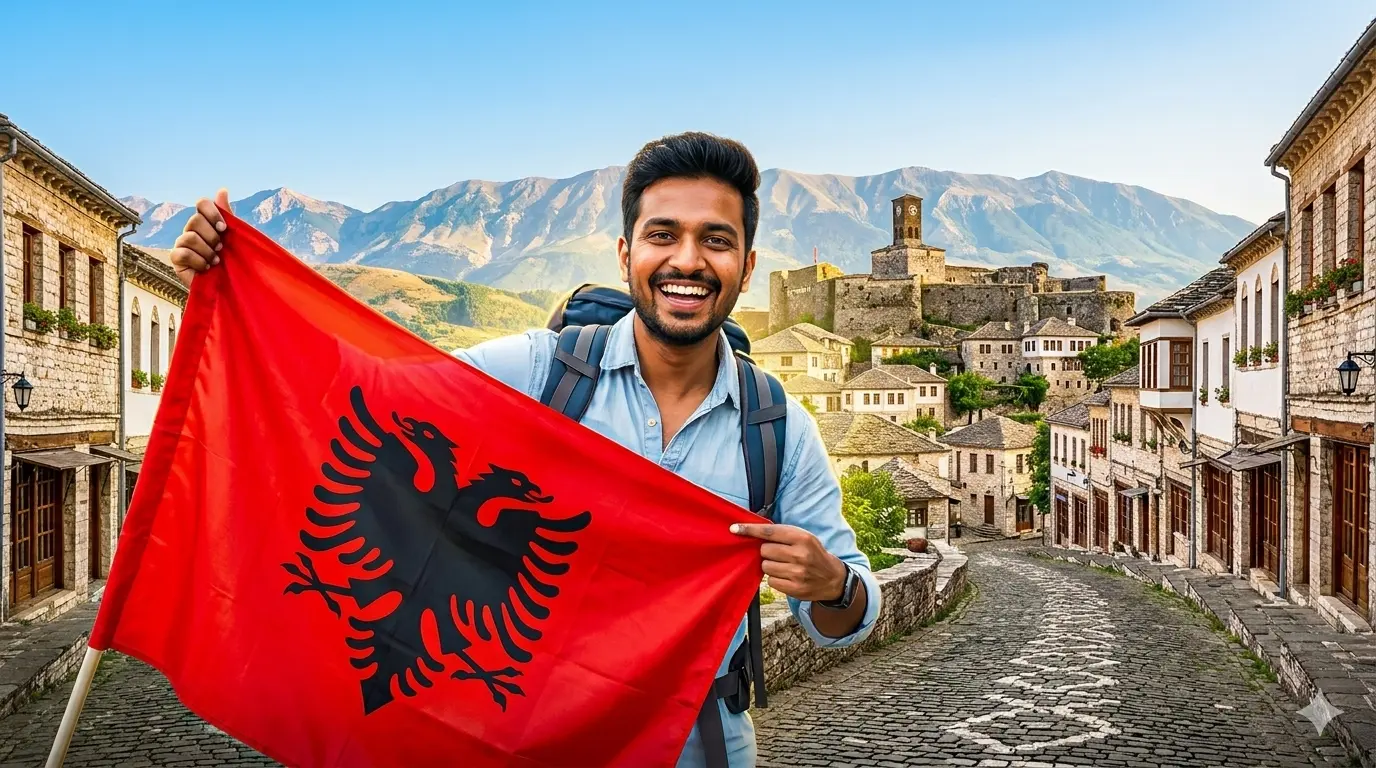
Albania, a small but stunning country in Southeast Europe, has emerged as a hidden gem for Indian travelers in recent years. With its turquoise Adriatic beaches, dramatic mountain ranges, and rich cultural heritage, Albania offers a mix of relaxation and adventure that appeals to tourists, students, and professionals alike. For Indians looking to explore Europe beyond the usual destinations, Albania provides a more affordable and less crowded alternative while still offering authentic European experiences.
As travel opportunities expand in 2026, understanding Albania’s visa rules becomes crucial for Indian citizens. Visa requirements can differ depending on whether you plan to visit for tourism, study, work, or long‑term residence. Moreover, Albania has specific exemptions for travelers holding valid Schengen, UK, or US visas, which can simplify entry for many Indians. Knowing the correct visa type, required documents, and application process ensures a smooth journey and helps avoid last‑minute complications at the border.
Is Albania Part of the Schengen Visa System?
Albania is not a member of the Schengen Area, which means travelers cannot use a standard Schengen visa alone to enter the country. Instead, Albania has introduced flexible entry rules that make travel easier for many nationalities, including Indian citizens.
Key Visa Rules for Albania (2026)
- Schengen Substitute: If you hold a valid, multiple‑entry Schengen visa or a residence permit from a Schengen state, and you have already used it at least once, you can enter Albania without applying for a separate visa.
- US/UK Visa Shortcut: Similarly, travelers with a valid, multiple‑entry US or UK visa or residence permit (used at least once) are also eligible for visa‑free entry.
- E‑Visa for Indians: For those who do not qualify under the exemptions, Albania offers a convenient Type C e‑Visa through the official portal (e‑visa.al). This online system allows Indian applicants to avoid long embassy queues and submit their documents digitally.
- Duration of Stay: Visa‑free entry or e‑Visa approval generally allows visitors to stay in Albania for up to 90 days within a 180‑day period.
- Independent Status: While Albania is geographically in Europe, it operates independently of Schengen visa rules, maintaining its own entry policies.
Why This Matters for Indians
For Indian travelers, these rules mean Albania is one of the more accessible European destinations in 2026. If you already hold a Schengen, US, or UK visa, you can add Albania to your itinerary without extra paperwork. Otherwise, the e‑Visa system provides a streamlined way to apply online, making the process faster and more convenient.
Albania Visa Types for Indians
When planning a trip to Albania in 2026, Indian citizens must carefully select the visa type that matches their purpose of travel. Albania offers several categories of visas, each designed for specific needs, ranging from short tourist visits to long‑term residence. Choosing the right visa ensures a smooth application process and prevents unnecessary delays.
The Tourist Visa is ideal for leisure travelers who want to explore Albania’s beaches, mountains, and cultural sites. It generally allows stays of up to 90 days. For professionals attending meetings, trade fairs, or conferences, the Business Visa is required, often supported by an invitation from an Albanian company. Students admitted to Albanian universities must apply for a Student Visa, valid for the duration of their academic program. Those with confirmed job offers need a Work Visa, which is linked to their employment contract and requires prior approval of a work permit.
Travelers transiting through Albania en route to another destination may need a Transit Visa, valid for a few days. Finally, individuals intending to stay longer for family reunification, employment, or settlement must apply for a Residence Permit, which is usually issued for one year or more and can be renewed.
A Comparison Table for various visa types in Albania
| Visa Type |
Purpose |
Duration |
Eligibility Requirements |
| Tourist Visa |
Leisure, sightseeing |
Up to 90 days |
Valid passport, travel plan, proof of funds |
| Business Visa |
Meetings, trade, conferences |
Up to 90 days |
Invitation from Albanian company, financial proof |
| Student Visa |
Education in Albania |
Course duration |
Admission letter, financial documents, insurance |
| Work Visa |
Employment opportunities |
Contract period |
Job offer, work permit approval |
| Transit Visa |
Passing through Albania |
1–5 days |
Proof of onward travel, valid visa for next destination |
| Residence Permit |
Long-term stay or settlement |
1 year+ |
Family ties, employment, or settlement basis |
Who is Eligible for an Albanian eVisa?
Albania operates its own visa system, separate from the Schengen Area, and offers a convenient eVisa program for citizens of many countries. This system allows travelers to apply online, making the process faster and more accessible compared to traditional embassy applications.
Who Can Apply
- Non‑EU/Non‑Schengen Nationals: Citizens from Asia, Africa, and the Americas-including Indian passport holders-are eligible to apply for an Albanian eVisa.
- Indian Citizens: Indians who do not qualify for visa‑free entry through Schengen, US, or UK visas can apply directly for a Type C eVisa online.
- Other Eligible Travelers: Nationals from countries outside the European Union and Schengen Area who require a visa for Albania can use the eVisa portal.
Who Does Not Need an eVisa
- EU and Schengen Citizens: Travelers from the European Union and Schengen Area enjoy visa‑free short stays in Albania.
- Holders of Certain Visas: Indian citizens (and other nationals) who already hold a valid, multiple‑entry Schengen, US, or UK visa or residence permit-used at least once-can enter Albania visa‑free for up to 90 days within a 180‑day period.
Key Benefit
The eVisa system is designed to simplify travel for eligible applicants by allowing them to submit documents, pay fees, and track applications online. For Indian travelers, this means avoiding long embassy queues and gaining quicker access to Albania’s growing tourism and work opportunities.
Albania Visa Required Documents
Applying for an Albania visa in 2026 requires careful preparation of documents. Indian applicants must ensure that every paper is valid, complete, and presented in the correct format. Missing or incorrect documents are one of the most common reasons for delays or refusals, so attention to detail is essential.
Passport Validity Requirements
Your passport must be valid for at least six months beyond your intended stay in Albania. It should also have at least two blank pages for visa stamps.
Visa Application Form
A completed and signed application form is mandatory. Ensure all details match your passport and supporting documents.
Photographs
Recent passport‑size photographs are required, usually in color, with a white background. Specifications often include size (35mm x 45mm) and a clear, front‑facing image.
Proof of Accommodation and Travel Itinerary
Hotel bookings, rental agreements, or invitation letters must be provided, along with confirmed flight reservations.
Financial Proof
Bank statements for the last three to six months, salary slips, or sponsorship letters are needed to show you can cover expenses during your stay.
Invitation Letters (if applicable)
Business travelers or those visiting family must include an official invitation letter from Albania.
Insurance Requirements
Travel insurance covering medical emergencies and repatriation is compulsory.
Step‑by‑Step Checklist
- Verify passport validity.
- Fill and sign the visa application form.
- Attach photographs as per specifications.
- Collect proof of accommodation and travel bookings.
- Prepare financial documents.
- Add invitation letters if required.
- Purchase travel insurance.
- Review all documents before submission.
Key Albania Visa Fees and Info for Indians (2026)
When applying for an Albania visa in 2026, Indian citizens should be aware of the fee structure, which varies depending on the type of visa and the length of stay. These fees are payable at the time of application and are non‑refundable, even if the visa is refused. In addition to the base visa fee, applicants may also need to pay service charges to the embassy, consulate, or authorized visa centers such as VFS Global.
Detailed Breakdown by Visa Type
- Tourist Visa: Approximately INR 4,500 – 6,000
- Business Visa: Approximately INR 5,000 – 7,000
- Student Visa: Approximately INR 6,000 – 8,500
- Work Visa: Approximately INR 7,000 – 10,000
- Residence Permit: Higher fees depending on duration and category
Service Charges and Handling Fees
Visa centers may add processing or courier charges, typically ranging from INR 1,000 – 2,000. Applicants should confirm the exact amount with the Albanian Embassy or the authorized visa center before applying.
Practical Budgeting Tips
- Always budget for both the visa fee and service charges.
- Factor in additional costs such as travel insurance, document translations, and notarizations.
- Apply early to avoid paying extra for urgent processing.
- Keep some buffer funds in case of updated fee structures or policy changes in 2026.
By planning ahead and understanding the complete cost, Indian applicants can avoid surprises and ensure a smooth visa application experience.
How to Apply Albania Visa from India in 2026
Applying for an Albania visa in 2026 is a straightforward process if you follow the correct steps and prepare your documents carefully. Indian citizens can apply either online (where available) or offline through the Albanian Embassy, consulate, or authorized visa centers such as VFS Global.
Step‑by‑Step Application Process
- Identify the visa type that matches your purpose of travel (tourism, business, study, work, or residence).
- Gather all required documents including passport, application form, photographs, travel itinerary, proof of accommodation, financial statements, and insurance.
- Complete the visa application form online or download and fill it manually. Double‑check that all details match your passport.
- Book an appointment at the Albanian Embassy or visa center. Appointments are mandatory for submission and biometric verification.
- Submit your application along with supporting documents and pay the visa fee plus service charges.
- Attend an interview if required. Business, student, and work visa applicants are often asked to explain their purpose of travel and provide additional proof.
- Track your application status online or through the visa center.
- Collect your visa once approved, and review the details carefully to ensure accuracy.
Where to Submit Applications
- Albanian Embassy or Consulate in India.
- Authorized visa centers (such as VFS Global) that handle applications on behalf of the embassy.
Common Mistakes to Avoid
- Submitting incomplete or outdated documents.
- Applying too close to the travel date, leaving insufficient processing time.
- Ignoring the requirement for travel insurance.
- Providing inconsistent information between the application form and supporting documents.
By following these steps and avoiding common errors, Indian applicants can ensure a smoother visa process and increase their chances of approval.
Albania Visa Processing Time 2026
The time it takes to process an Albania visa application in 2026 depends on the type of visa and the workload at the embassy or visa center. For most short‑term visas, such as tourist or business visas, the average processing time is 10 to 15 working days. Student visas usually take longer, around 3 to 6 weeks, as they require verification of admission and financial documents. Work visas are more complex and may take 4 to 8 weeks, since they involve approval of employment contracts and work permits. Long‑term residence permits can take several months, depending on the category and supporting evidence.
Factors That May Delay Approval
- Incomplete or incorrect documentation.
- High application volumes during peak travel seasons.
- Additional background checks or verification of financial records.
- Delays in receiving supporting documents from Albanian institutions (universities or employers).
Practical Advice on When to Apply
Indian applicants should plan ahead and apply well in advance of their intended travel date. For short‑term visas, applying at least 4 to 6 weeks before departure is recommended. Students and workers should begin the process 2 to 3 months in advance, allowing time for interviews and document verification. For residence permits, early preparation is essential, as approvals can take several months.
By applying early and ensuring all documents are complete, Indian travelers can avoid last‑minute stress and enjoy a smoother journey to Albania.
Real‑World Insights for Indian Travelers
Examples of Indian Travelers’ Experiences
- Many Indian tourists who already had a Schengen visa reported that entering Albania was hassle‑free, as they were allowed visa‑free entry for short stays. This made Albania a popular add‑on destination during European trips.
- Students applying for Albanian universities found the e‑Visa system convenient, as it allowed them to submit applications online without visiting the embassy. However, they noted that financial proof and insurance documents were closely scrutinized.
- Business travelers highlighted that invitation letters from Albanian companies were essential, and incomplete paperwork often led to delays.
Practical Tips from Immigration Consultants
- Apply early: Consultants recommend applying at least 4–6 weeks before travel, and 2–3 months in advance for student or work visas.
- Check exemptions: If you already hold a valid Schengen, US, or UK visa, you may not need a separate Albanian visa for short stays.
- Prepare strong financial documents: Bank statements and salary slips are often reviewed carefully to ensure applicants can support themselves.
- Insurance is mandatory: Travel insurance covering medical emergencies and repatriation is required for all visa types.
Albania’s Visa‑Free Entry Rules (2026)
- Visa‑free entry: Indian citizens with a valid multiple‑entry Schengen, US, or UK visa (used at least once) can enter Albania visa‑free for up to 90 days within a 180‑day period.
- With no qualifying visa: Indians must apply for an Albanian visa or use the e‑Visa system, which simplifies the process by allowing online applications.
If you already hold a Schengen, US, or UK visa, Albania is one of the easiest European countries to visit in 2026. For others, the e‑Visa system offers a streamlined process, but complete documentation and early application remain critical for success.
Would you like me to now draft the “Conclusion” section that ties all the information together and gives Indian readers a confident final takeaway?
Permanent Residency in Albania (2026)
Eligibility Requirements
- Continuous Legal Residence: At least 5 years of lawful stay in Albania with valid residence permits.
- Clean Criminal Record: Applicants must not have serious offenses or ongoing investigations.
- Financial Stability: Proof of income or employment to show self‑sufficiency.
- Integration Criteria: Knowledge of Albanian language and evidence of social integration may be required.
Application Process
- Hold a Residence Permit: Start with a long‑term residence permit (Type D visa followed by residence card).
- Maintain Residency: Renew permits annually or as required, ensuring uninterrupted legal stay.
- Apply for PR: After 5 years, submit an application to the Albanian Directorate of Migration or local immigration office.
- Provide Documents: Passport, residence history, proof of income, accommodation, insurance, and police clearance.
- Biometrics & Interview: Applicants may need to attend an interview and provide biometric data.
- Approval & PR Card: Once approved, you receive a permanent residence card, renewable every 10 years.
Pathway to Citizenship
- After 7 years of continuous residence, foreigners may apply for Albanian citizenship, provided they meet language and integration requirements.
Conclusion
Applying for an Albania visa in 2026 may seem complex at first, but with the right preparation it is a manageable process for Indian citizens. The key is to identify the correct visa type-whether tourist, business, student, work, transit, or residence-and ensure that all required documents are complete and accurate. Fees vary depending on the category, and applicants should also budget for service charges and additional costs such as insurance.
Processing times differ across visa types, with short‑term visas usually taking two weeks and long‑term permits requiring several months. Delays often occur due to incomplete paperwork or peak travel seasons, so planning ahead is essential. Immigration consultants consistently advise Indian applicants to apply early, double‑check financial and travel documents, and purchase valid insurance before submission.
For those holding valid Schengen, US, or UK visas, Albania offers visa‑free entry for short stays, making it one of the more accessible European destinations. For others, the e‑Visa system provides a convenient way to apply online.
With careful preparation, Indian travelers can look forward to exploring Albania’s natural beauty, cultural heritage, and growing opportunities. The country is accessible, welcoming, and rewarding for those who plan their journey thoughtfully.
Frequently Asked Questions
How to Get a Job in Albania?
Securing employment in Albania as an Indian citizen in 2026 involves both finding a suitable job offer and completing the visa process. The Albanian government requires foreign nationals to obtain a work visa before starting employment, and this is closely tied to the approval of a work permit by the employer in Albania.
Step‑by‑Step Process
- Find a Job Offer
Begin by applying directly to Albanian companies or through international job portals. Employers must be willing to sponsor your work permit.
- Work Permit Approval
Once you receive a job offer, your employer in Albania applies for a work permit on your behalf. This is a critical step, as the visa cannot be issued without it.
- Submit Application
With the approved work permit, you can apply for a work visa at the nearest Albanian embassy or consulate in India. Submit all required documents, including your passport, application form, photographs, employment contract, proof of accommodation, and financial records.
- Attend Interview (if required)
Some categories of work visas may require an interview. Be prepared to explain your role, employer details, and financial stability.
- Wait for Approval
Processing times vary but typically take 4 to 8 weeks. Once approved, you will receive your visa, allowing you to travel to Albania and begin work.
Practical Tip: Apply well in advance, as delays can occur due to document verification or seasonal demand. Having complete paperwork and strong employer support increases your chances of success.
How Much is the Visa Fee for Albania?
Understanding the visa fee structure is an important part of planning your trip to Albania in 2026. The cost depends on the type of visa, the duration of stay, and whether you are applying for a single‑entry or multiple‑entry visa.
E‑Visa (Short‑Stay)
For most Indian travelers applying for a short‑stay e‑Visa (Type C), the fee typically ranges between €30 and €50 (approximately USD 35–60). In addition, applicants often pay service charges, which can bring the total cost to around USD 118. This includes the visa fee itself and processing or handling charges.
Long‑Term and Type D Visas
For specialized or long‑term visas, such as student, work, or residence permits, fees are significantly higher. Depending on the category, costs can reach €400–€488. These visas require more documentation and longer processing times, which explains the higher fee.
Payment Rules
- Fees are usually paid online through the official e‑visa.al portal.
- Payment must be completed within 15 days of the fee request; otherwise, the application may be rejected.
- Service charges from visa centers or consulates may apply, typically ranging from INR 1,000–2,000.
Processing Time
Short‑stay e‑Visas are generally processed within 15 working days, though in some cases it may take up to 30 days. Long‑term visas often require several weeks or months.
Practical Tip: Budget not only for the visa fee but also for related costs such as insurance, translations, and courier services. Applying early helps avoid paying extra for urgent processing.
Is an Albania Visa Easy for Indians?
Yes, Albania has made the visa process relatively straightforward for Indian citizens in 2026. The country offers a convenient eVisa system, which allows applicants to complete the entire process online without visiting an embassy. Indians can apply for both single‑entry and multiple‑entry eVisas by filling out the application form, uploading the required documents, and paying the visa fee through the official portal.
The documents typically include a valid passport, recent photographs, proof of accommodation, travel itinerary, financial statements, and travel insurance. Once submitted, applications are processed within 15 to 30 working days, depending on the type of visa and the volume of applications.
For short stays, Indian citizens holding a valid, multiple‑entry Schengen, US, or UK visa (used at least once) can enter Albania visa‑free for up to 90 days within a 180‑day period. This exemption makes Albania particularly accessible for Indians who already travel to Europe or North America.
Practical Tip: To avoid delays, applicants should double‑check all documents before submission and apply at least a month before their intended travel date. With proper preparation, Albania is one of the easier European destinations for Indians to access, whether for tourism, study, or work.
How Much is the Monthly Salary in Albania?
As of early 2026, Albania’s salary levels reflect both its growing economy and regional differences. The average gross monthly salary is around 83,000–83,300 Albanian Lek (ALL), which equals approximately €800–€850 or about $900 USD. However, actual take‑home pay is lower once taxes and social contributions are deducted. With a flat income tax of 13% and social security contributions of about 11.2%, many workers receive a net salary closer to €450–€800.
Minimum Wage
The national minimum wage currently stands at 40,000 ALL per month (around €400). The government has announced plans to raise this to €500 by January 2026, reflecting efforts to align wages with rising living costs.
Regional and Industry Variations
- Tirana (Capital): Salaries in Tirana are significantly higher than the national average, especially in professional and technical fields.
- Rural Areas: Wages tend to be lower, often closer to the minimum wage.
- High‑Demand Sectors: IT, specialized engineering, and tourism management offer better pay, with senior roles earning well above the average.
Top‑Paying Roles
CEOs, senior managers, and specialized professionals in IT or finance can earn between 150,000 and 240,000 ALL per month (roughly €1,500–€2,400).
While Albania’s salaries are modest compared to Western Europe, the cost of living is also lower. For Indian professionals considering work opportunities, Tirana and high‑demand sectors offer the most competitive pay.
Would you like me to also add a cost‑of‑living comparison (housing, food, transport) so readers can see how far an Albanian salary stretches in daily life?
Is Albania a Rich or Poor Country?
Albania is best described as a developing, upper‑middle‑income country. While it has made significant progress in recent decades, it remains one of the poorer nations in Europe when measured against Western standards. Its GDP per capita is well below the European Union average, though steady growth has been driven by tourism, services, and infrastructure development.
Economic Context
- Income Level: Classified by the World Bank as upper‑middle income, but still financially disadvantaged compared to Western Europe.
- GDP Growth: Albania’s economy has expanded consistently, yet its GDP per capita remains among the lowest in the Balkans.
- Poverty and Wages: Poverty rates have declined, but many Albanians still face economic challenges. Average monthly salaries hover around €800 gross, with minimum wages closer to €400–€500.
- Informal Economy: A large share of Albania’s economy-estimated at nearly 50%-operates informally, which limits tax revenue and social protections.
Key Drivers
- Agriculture: Employs nearly half of the workforce, though productivity is relatively low.
- Tourism: Rapidly growing, especially along the Adriatic and Ionian coasts, bringing in foreign investment and boosting local incomes.
- Services and IT: Emerging sectors that are helping diversify the economy.
Takeaway
Albania is not in absolute poverty, but it is financially disadvantaged compared to its Western European neighbors. However, with rising tourism, infrastructure projects, and gradual integration with European markets, Albania is steadily improving its economic position and offering more opportunities for foreign workers and investors.
Would you like me to also add a “Cost of Living in Albania” section (housing, food, transport) so readers can see how Albania’s wages compare to everyday expenses?
How Long Can You Stay in Albania with a Visa?
For Indian citizens and other foreign travelers, Albania issues different categories of visas depending on the purpose of visit. The most common is the short‑stay visa, also known as a Type C visa.
Short‑Stay Visa Rules
- Duration: A short‑stay visa allows you to remain in Albania for up to 90 days within a 180‑day period, starting from the date of your first entry.
- Format: It may be issued as a traditional stamp in your passport or in electronic format (e‑Visa).
- Entries: Type C visas can be granted for single entry, double entry, or multiple entries, depending on your application and approval.
Longer Stays
If you plan to stay in Albania for more than 90 days-for work, study, or family reunification-you must apply for a long‑term visa (Type D) and then obtain a residence permit. These permits are typically valid for one year or more and can be renewed.
Key Takeaway
With a short‑stay visa, you can enjoy Albania for up to three months in any six‑month period. For longer stays, you’ll need to transition to a residence permit. Careful planning ensures you remain compliant with Albanian immigration rules.
What is the Best Time to Visit Albania?
Albania’s diverse geography-ranging from Adriatic beaches to rugged mountain ranges-means the best time to visit depends on what you want to experience.
Shoulder Seasons: May–June & September–October
These months are widely considered the ideal time to visit Albania. The weather is warm but not overly hot, crowds are smaller compared to peak summer, and both coastal and inland destinations are easily accessible. Travelers can enjoy the beaches, explore historic towns like Berat and Gjirokastër, and hike in the Albanian Alps without the summer rush.
Peak Summer: July–August
If your priority is sun and sea, July and August are perfect for Albania’s Riviera. Expect hot temperatures, lively nightlife, and crowded beaches. Accommodation prices are higher, and popular spots like Saranda and Ksamil can be busy, but the atmosphere is vibrant.
Spring & Autumn for Hiking
April and October are particularly good for hiking and sightseeing. The weather is mild, landscapes are lush, and cultural sites are less crowded. Autumn also brings harvest festivals and a more authentic local experience.
Winter Travel
While Albania is not a major winter sports destination, areas like Korçë and the mountains offer skiing and snow activities. Winter is also the quietest season for cultural tourism.
Key Takeaway: For balanced travel-beaches, mountains, and culture-the shoulder seasons (May–June and September–October) are the best. For pure beach holidays, July–August is ideal, while spring and autumn suit hikers and explorers.
Can You Apply for Albanian Citizenship?
Yes, foreigners-including Indian citizens-can apply for Albanian citizenship, but the process depends on your residency status and length of stay. Albania’s nationality law provides several pathways, with the most common being naturalization after continuous residence.
General Eligibility for Naturalization
- Residency Requirement: At least 5 years of continuous legal residence in Albania.
- Good Conduct: Applicants must not pose a threat to public order or national security and must have a clean criminal record.
- Financial Stability: Proof of income or employment is often required to show self‑sufficiency.
- Integration: Basic knowledge of the Albanian language and evidence of integration into society may be requested.
Special Cases
- Stateless Persons: Only the five‑year residence requirement applies, provided they pose no threat to Albania.
- Minors:
- Unemancipated minors automatically acquire Albanian citizenship when a parent is naturalized.
- Minors over 14 years old must give their consent before citizenship is granted.
Application Process
- Hold a valid residence permit and maintain continuous legal stay.
- Submit an application to the Albanian Directorate of Migration or local immigration office.
- Provide documents such as passport, residence history, proof of income, police clearance, and language/integration evidence.
- Attend an interview if required.
Pathway to Citizenship
After 7 years of residence, foreigners may also apply for citizenship directly, provided they meet integration and language requirements.
Is Albania Expensive for Indians?
Albania is generally considered a budget‑friendly destination, especially compared to Western Europe. For Indian travelers, the cost of living and travel in Albania is lower than in countries like Italy, France, or Germany, making it an attractive option for both short holidays and longer stays.
Travel Costs
- Accommodation: Budget hotels and guesthouses can cost as little as €20–€30 per night, while mid‑range hotels average €40–€70. Luxury stays are available but still cheaper than in neighboring Greece or Italy.
- Food: Eating out is affordable. A meal at a local restaurant may cost €5–€10, while a three‑course meal at a mid‑range restaurant is around €15–€20.
- Transport: Public buses are inexpensive, and taxis are cheaper than in most European capitals. Renting a car is affordable, especially if shared among travelers.
Practical Tips for Indians
- Plan Ahead: Booking accommodation and transport early helps keep costs low.
- Local Choices: Opting for local eateries and guesthouses instead of tourist‑heavy spots can save money.
- Currency: Albania uses the Lek (ALL), so carrying local currency is essential. Exchange rates are favorable compared to the Euro.